

The necessary change in the textile industry and in our society
Many books are written to shed light on shady practices within the textile industry. Such books help us see the true crudeness of these actions as well as discover new and engaging initiatives and shopping practices that allow us to get closer to a more ethical and environmentally sustainable system where people, the environment, and creativity hold equal importance to financial benefit.
There is a surging increase in the number of voices that are denouncing the reproachable practices of the fashion industry. A contaminating and discriminatory industry which we all form part of, treats its workers and the environment with savagery and cruelty through practices that, whether we are aware of them or not, hide underneath the tags in our clothes.
The Future of Fashion: Understanding Sustainability in the Fashion Industry
Author: Tyler Little
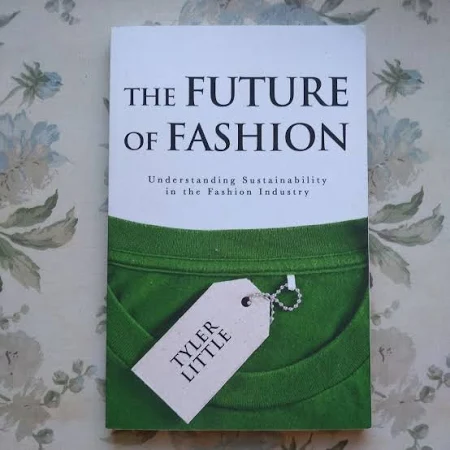
“Not many people understand how the current fashion industry is damaging our environment. The Future of Fashion will provide you with the opportunity to uncover this well-kept secret. But, more importantly, The Future of Fashion will show you why there is still hope for the fashion industry and delve deep into: * The individuals going out and making a difference in the world of sustainable fashion * Exploring a host of sustainable fashion topics from innovation to psychology to entrepreneurship * Personal accounts and socially-conscious movements from those making waves within the sustainable fashion industry.” — Back cover.
Zero Waste Fashion Design
Author: Timo Rissanen and Holly McQuillan
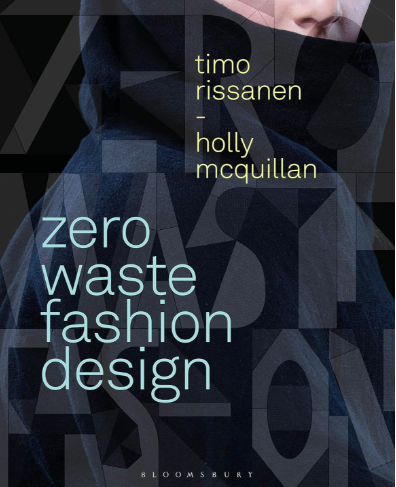 A very practical book with flat patterns and more than 20 fashion drawing exercises as well as interviews with sustainable fashion designers.
Timo Rissanen is a professor at the University of Technology Sydney, Australia and a fashion textiles researcher with an interest in the interconnection between sustainability and social justice as it relates to the contemporary fashion industry.
Holly McQuillan is Assistant Professor in Multimorphic Textile Systems at Delft University of Technology, where her current research explores the design and development of textile fiber-yarn-form systems.
Author: Dinie van den Heuvel
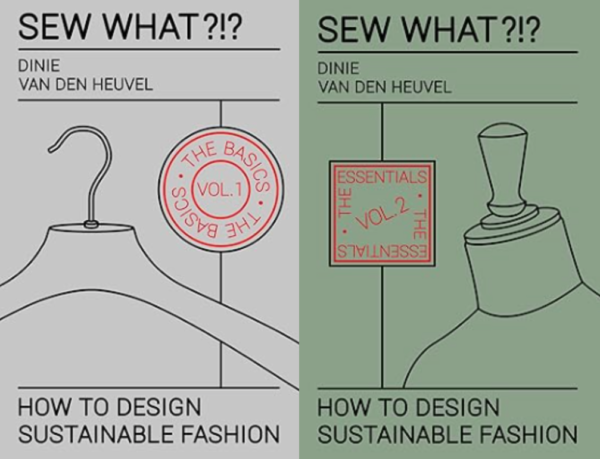 Volume 1 delves into the fundamentals of sustainable design by teaching the importance of transparency in the supply chain, the design approach and its social implications of fashion production, and the economics of sustainable fashion.
Volume 2 covers what you need to know about sustainable fibers and also the type of chemical knowledge needed to understand the impact of color and finish on fabrics.
How can we measure our sustainable impact? Why do we burn most discarded clothes? How can we recycle fashion today? What about energy consumption? What is vegan fashion and why is it crucial to a sustainable fashion world?
Author: Wearme Fashion
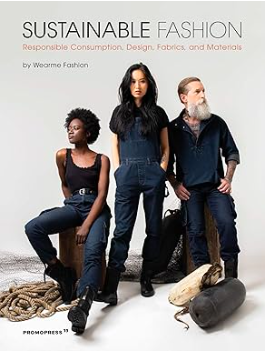
A broad book that covers alternative forms of production combined with practical advice on clothing care, ecological and reused materials, information on different types of fabrics, as well as new business perspectives and renewal of industrial processes.
A book aimed at designers, fashion companies, retailers who want to have a more conscious vision of sustainability while meeting the demands of an increasingly conscious customer.
Foot Work: What Your Shoes Tell You About Globalisation
Author: Tansy E. Hoskins
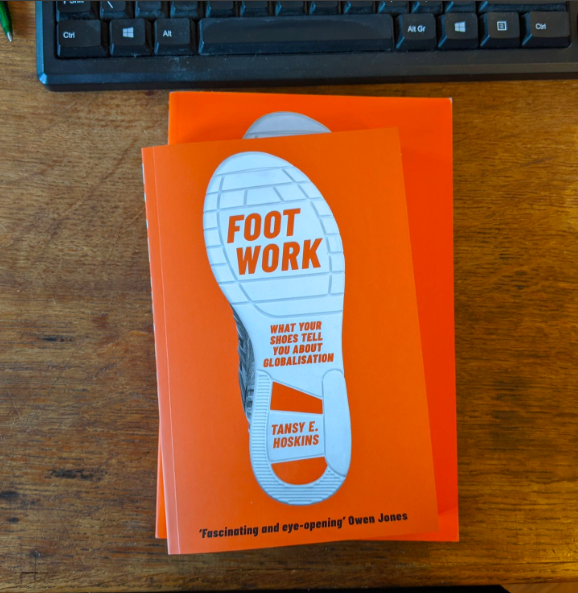
Tansy E. Hoskins is an author and journalist who lives in London and in her second book covers the footwear industry.
It has never been so cheap to buy a pair of shoes or sneakers and perhaps it has never been as desired as it is now. The status of sports brands reaches global magnitude.
However, the cost to the planet has never been greater. In 2019, 66.6 million pairs of shoes were manufactured worldwide every day.
In this book, the author warns about the dark origins of the shoes we wear, talking about an industry that exploits workers and deceives consumers. An essential read for lovers of footwear and the fashion industry.
Consumed: On colonialism, climate change, consumerism & the need for collective change
Author: Aja Barber
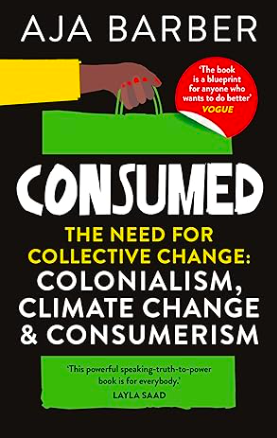
Aja Barber, an influencer and activist on racial issues, approach in the first part of the book the injustices in our consumer industry and the cruel history of the textile industry that begins with slavery, systematic racism and wealth inequality.
It also tells us about the oppressive systems in the industry, the current lack of diversity racial and economic equality.
In the second half she covers consumption issues and the reasons why we fill the painful void with our purchases.
Fashion & Sustainability: Design for Change
Author: Kate Fletcher and Lynda Grose
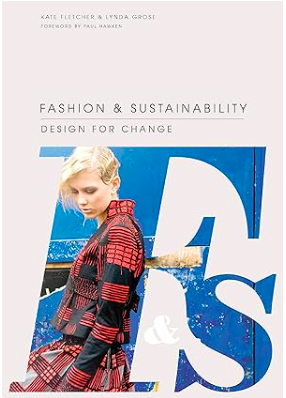 This book is organised into three parts, the first of which focuses on the evolution of fashion products, following the life cycle of a garment and its relationship with innovation in materials, manufacturing, distribution, use and reuse.
The second part analyzes ideas that can transform the fashion system into something more relevant and sustainable for the planet and consequently for the consumer, explaining new business models.
The third part tells us about the transformation of the role of fashion designers and analyses examples in which they go from stylist or creator to activist and communicator.
Loved Clothes Last: How the Joy of Rewearing and Repairing Your Clothes Can Be a Revolutionary Act
Author: Orsola de Castro
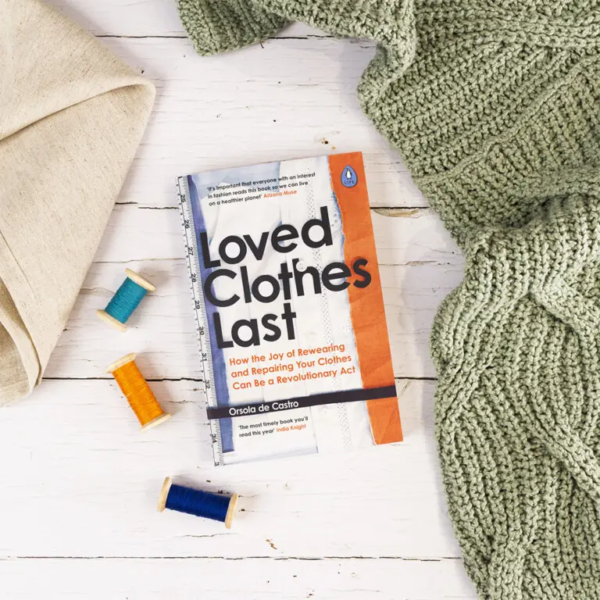 Orsola de Castro founded Fashion Revolution in 2013 and currently continues to be one of the pioneers in the global campaign in response to the collapse of the Rana Plaza factory, becoming an internationally recognised opinion leader in sustainable fashion.
A woman of great importance in the world fashion scene, Orsola in her new book covers several ways to fix, repair and give new life to your wardrobe to achieve a more sustainable lifestyle.
It also teaches us to examine our purchasing habits, opting for more sustainable and conscious attitudes, making us buy better, reducing our carbon footprint, having a positive environmental impact and avoiding disposable consumption.
The author gives us practical tips for caring for and paying attention to our clothes, by hand washing them, steam and spot cleaning, air drying instead of tumble drying or reviving your clothes by sewing or crocheting.
How To Break Up With Fast Fashion: A guilt-free guide to changing the way you shop – for good
Author: Lauren Bravo
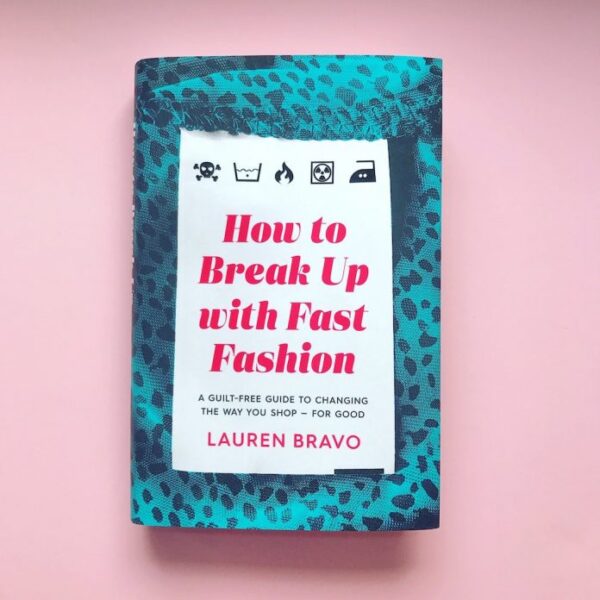 Journalist Lauren Bravo, who writes about fashion, popular culture, food, travel and feminism, in her new book tells us how to get out of Fast Fashion and disposable consumption.
The book, with its practical advice, helps us change our perception of the purchases we make for our wardrobe and makes us fall in love with what we already have, directing our gaze towards more sustainable ways of consuming, from changing clothes even the charity shops.
Unraveled: The Life And Death of a Garment
Author: Maxine Bedat
 Unraveled is a very interesting journey into the complete manufacturing of a pair of jeans. The author, Maxine Bédat, first takes us to a cotton farm in Texas to talk about fertilisers that poison the land and how we can thrive without using them.
From the USA we go to factories in China where contaminating chemical products, many of them banned in the West, are part of the production of these jeans through weaving and dyeing. From there, we go to sewing factories in Bangladesh and Sri Lanka where many women work in conditions similar to slavery with extremely low wages and back to America, the author tells us about our jeans that are sold and handled by Amazon employees, pressured to be as fast as the robots, which are already being prepared to replace them.
Finally, when those jeans are out of use, they will probably be sent to landfill – or, if they have been “donated”, sent back across the world to Africa, where they are sold for pennies on second-hand markets or buried and burned in mountains of garbage.
A Life Less Throwaway: The lost art of buying for life
Author: Tara Button
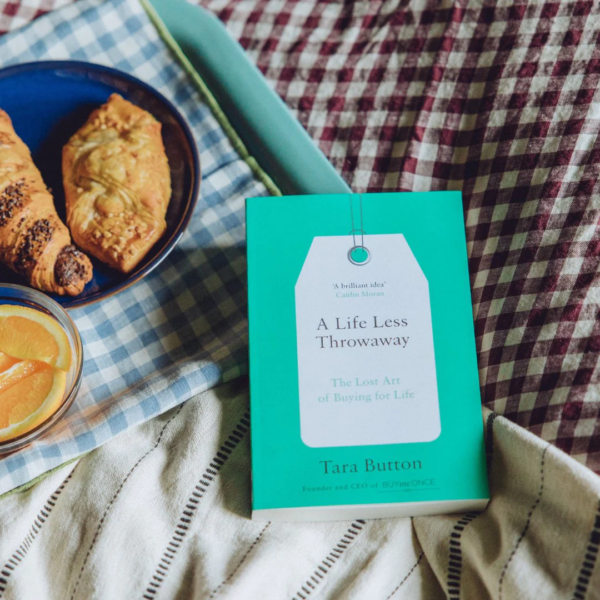 Tara Button, author of this book, tells us about a lifestyle where we practice “conscious curation” by carefully and consciously choosing each object in our daily lives.
Through the quality and durability of what we buy, Tara proposes a life that celebrates what lasts, what is timeless and really has to do with each person’s style, instead of surrounding ourselves with disposable things that we often buy for influence external.
There are 10 steps to mastering “mindful curation” and each step is explained in this book. She highlights the importance of finding a purpose for things and identifying our priorities through our tastes and style.
Author: Alyssa Couture
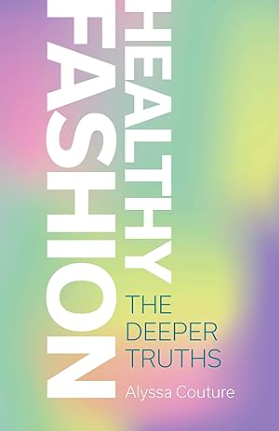
The book covers topics such as: fashion for human health, for the mind, body and spirit. Fashion for the environment and conscious consumption. The future of the textile industry, as well as modern fashion concepts and much more.
We all want more ways to feel and look healthy and this book teaches us how to do that by showing that fashion can be a tool to promote and create healing, health and overall balance and harmony.
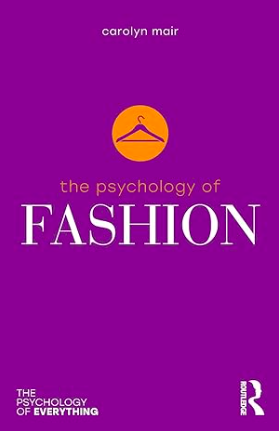
Author: Carolyn Mair
Professor Carolyn Mair is a freelance consultant specializing in fashion psychology and tells us in her new book how clothes can affect our cognitive processes and how retail environments manipulate consumer behavior.
A psychological yet sustainable approach to our relationship with clothing offering an insightful introduction to the exciting and dynamic world of fashion in relation to human behavior
The book explores how fashion design can impact healthy body image, how psychology can inform a more sustainable perspective on clothing production and disposal, and why we develop certain purchasing behaviors.
Fibershed
Author: Rebecca Burgess

There is a major disconnect between what we wear and our knowledge of its impact on land, air, water, labor, and human health. Even those who value access to safe, local, nutritious food have largely overlooked the production of fiber, dyes, and the chemistry that forms the backbone of modern textile production. In Fibershed readers will learn how natural plant dyes and fibers such as wool, cotton, hemp, and flax can be grown and processed as part of a scalable, restorative agricultural system. They will also learn about milling and other technical systems needed to make regional textile production possible.
Sustainable Fashion in a circular economy
Author: Kirsi Niinimäki

This publication presents up-to-date research about the various levels of circularity at work in the fashion industry. Experts of design, consumption, business and industry explain how circularity in the production and consumption of fashion can be approached in manifold ways. This collection of texts highlights the fresh, critical thinking that is currently influencing the fashion industry to adopt the practice of sustainable transformation within a circular economy.
The conscious closet: The revolutionary guide to looking good while doing good
Author: Elizabeth L. Cline

This book is not just a style guide. From the same author as “Overdressed: The Shockingly High Cost of Cheap Fashion” (see below) this book is a call to action to transform one of the most polluting industries on earth into a force of good, on both a micro level—our own closets—and macro level, by learning where and how our clothes are made, and how to connect to a global and impassioned community of stylish fashion revolutionaries for bigger systematic change.
Fashionopolis: The price of fast fashion and the future of clothes
Author: Dana Thomas

For people interested in clothes or working in the industry, this book will have two uses. It provides a history of the human and environmental damage done by the mass production of clothes, and it tells the stories of entrepreneurs and scientists who are trying to make clothes with less cruelty and filth. The book has implications beyond cloth and thread. It could, in a sense, have been written about any class of consumer product — food, say, or consumer electronics. The story is globalization, and in particular how it delivers cheap, high-quality goods by externalizing the costs of production while concealing this manoeuvre from the end consumer. It is a pattern infinitely repeated, and it can’t go on.
Rise & Resist: How to Change the World
Author: Clare Press

Clare Press is also the author of Wardrobe Crisis, described below. In Rise & Resist, the author talks about a new activism that is gaining followers all over the world. The great political march is back, formed by different communities creating new movements in favor of social justice and the environment.
The books narrates passionate stories about people that, through their work, are changing the world we live in; people around the globe that are doing their part in this new revolution. The formation of a new counterculture that proposes to rethink the way in which we are living today and how to build a more sustainable world for tomorrow.
Fashion. Business. Spirituality: A Call to the Light workers of the Fashion Industry
Author: Farah Liz Pallaro
This book shouts out to the workers in the fashion industry. Many of those working in this sector were lured by the beauty,  fantasy, creativity and glamour that encompasses the fashion world and quickly come to realize that it also involves short deadlines, sleepless nights, stressful situations, critique and a lot of ego.
This book talks about the fashion industry but not necessarily about seasons, trends, or collections. The focal point in this book is the human aspect within the industry, the consciousness and spirituality of each individual. A more scrupulous, harmonious fashion world with higher moral values is, indeed, possible.
This is a Good Guide – for a Sustainable Lifestyle
Author: Marieke Eyskoot

If you’d like to live a more sustainable lifestyle without investing too much time, effort or money, then this book is for you. This manual on how to achieve a sustainable life is full of handy tips on beauty, fashion, food, home, work, travel and leisure. It highlights how, these days, style and sustainability go hand in hand. In this contemporary guidebook, the author unveils locations, brands, pretty places that support sustainable fashion and lifestyle.
Tu Consumo Puede Cambiar el Mundo
Author: Brenda Chávez

After working on many fashion magazines, journalist Brenda Chávez presents a thorough essay containing chapters dedicated to fashion, beauty, nutrition, energy and finance. A book capable of easily turning itself into a powerful manual for, through alternate shopping tendencies, a new and more just and ethical redistribution of wealth. We loved this book.
Slow Clothing: Finding Meaning in What We Wear
Author: Jane Milburn 
In an era that is dominated by cheap and synthetic fashion, Jane Milburn came upon the philosophy of Slow Clothing while reorganizing her wardrobe so it made more sense and had historical relevance. The author tells her story and brings about many ideas that can be easily implemented.
Slow Clothing reflects our style and spirit despite the trends in fashion. Our careful purchasing, our skills and the care we have for our garments are reflections of who we are. The reader becomes an original, authentic and ingenious apprentice.
Wardrobe Crisis
Author: Clare Press

From famous American designers’ humble beginnings to the creation of multinational emporiums, Clare Press takes us on a voyage of discovery through the ethical aspects of the fashion industry. Wardrobe Crisis is a complete analysis of the complex world of fashion that takes us through the clandestine studios of high couture while digging up the origins of the current and frenetic culture of disposable clothing.
Where Am I wearing? A Global Tour To the Countries, Factories and People That Make Our Clothes
Author: Kelsy Timmerman
Kelsey Timmerman, journalist and travel writer, wanted to know where his clothes came from and who made them, so he traveled through Honduras, Bangladesh, Cambodia, China and back again. His book closely describes the relation between the regulations of impoverished textile workers and the materialistic lifestyle of the west.
As Where Am I wearing? introduces the reader into the human element of globalization, by learning the factory workers’ names, meeting their families and their way of life, it links the gap between global producers and consumers. The book narrates a trip to an Ethiopian fair trade shoe store that is changing the lives of its workers and it also discusses how workers around the globe are being exploited due to the rising food cost and decreasing demand due to the global financial crisis.
Both revealing and stimulating, Where Am I wearing? Puts a human face on the globalization of the economy.
Clothing Poverty: The Hidden World of Fast Fashion and Second-Hand Clothes
Author: Andrew Brooks

Where are your jeans from? Who made them? Where will they wind up? The author narrates the life cycle of a pair of denim jeans taking us through its different phases while untangling the ties between the fast-fashion industry and vintage shops. This book takes us on a tour around the world unveiling the different stages of a system that perpetuates inequality and poverty.
A Practical Guide to Sustainable Fashion
Author: Alison Gwilt 
This book is a practical guide that introduces strategies to achieve sustainability for each step of design and fashion production. Beginning from the day-to-day in the fashion industry, Allison Gwilt offers advice and alternative practices that focus on sustainability during each aspect of the production of a fashion collection. From design and the use of ecological mono material packaging to non-residual pattern making and re-evaluating techniques, this book profiles the social and environmental impacts garments bring about; it analyzes, through practical means, practices that fashion designers can utilize in the process.
The book contains numerous photographs and diagrams as well as examples from labels that are existing international references on the subject.
Ethical Fashion For a Sustainable Future (Moda Ética Para un Futuro Sostenible)
Author: Elena Salcedo Allende
 This practical guidebook is full of concepts, resources, people, and stimulating initiatives that help us embrace the shift to sustainable fashion. Topics such as using viable textiles, adhering to the regulation of raw materials to minimize shortages, elongating the lifespan of garments, ensuring dignified labor conditions, refurbishing garments for new use. In the day-to-day of the fashion industry, there are endless options and decisions that can be made to achieve a sustainable model.
By examining the lifespan of a product, Elena Salcedo introduces us to a sustainable fashion industry. This book is an expansive and practical review of the various options available in terms of materials, processes, logistics, distribution, and management of its final stages that fit in the sustainable model in fashion.
The Sustainable Fashion Handbook
Author: Sandy Black

Written by Sandy Black, professor of Design, Textile Technology and Fashion at the London College of Fashion, This manual tackles the problems originated by a fashion industry that prioritizes and favors fast and unregulated consumption. Divided by five chapters replete with interviews and accounts told by world famous fashion designers, this book addresses topics that range from fashion culture to the carbon footprint of each garment. We found it to be a broad and profound reference point for all aspects of ecologically sound fashion. It presents a possible future scenario if radical measures are introduced. Lastly, it offers a list of organizations that participate in promotional campaigns for environmental sustainability around the world.
Overdressed: The Shockingly High Cost of Cheap Fashion
Author: Elizabeth L. Cline
 Until recently, Elizabeth L. Cline was a typical American consumer accustomed to shopping in malls and discount stores. She bought a new garment almost every week but all she had was an overflowing closet filled with identical, low quality garments. When she purchased the seventh pair of canvas sneakers for 7 dollars, she realized that she was making a mistake.
Low cost consumption has fundamentally changed the way most Americans dress. The retail market is producing clothes in enormous quantities with the objective of selling them at low prices creating a disposable garment. After all, we have no reason to keep repairing and reusing what we own if styles change so quickly and it is cheaper to just buy more. So then, what are we doing with all these cheap clothes? More importantly, what are we doing with ourselves, our society, our environment and our economic well-being?
This book demonstrates how consumers can make a difference by supporting designers and fashion firms that are manufacturing elegant, innovative and sustainable apparel as well as how to refurbish and repair their wardrobe.
Naked Fashion: The New Sustainable Fashion Revolution
Author: Safia Minney
 Designers and creatives including photographers, models, illustrators, actors and journalists from around the world are talking about what they are doing to stimulate a more sustainable world.
Actress Emma Watson tells us why fair trade fashion is so important to her. Designer Vivienne Westwood talks about the textile industry and the high risks involved for the planet.
Any person with an active interest in fashion and on clothes or who desires a career in the field of fashion and communication will find inspiration and advice on how to make a difference.
This book is an invitation to join forces with consumers, entrepreneurs, and professional creatives who are using their talent and experience to create a better world.
To Die For: Is Fashion Wearing Out the World?
Author: Lucy Siegle

One of the first books about fashion that examines the inhumane and the ecologically devastating aspects behind the clothes that we habitually buy and wear. Siegle analyzes the worldwide epidemic of unsustainable fashion and makes a comparison between our economic health and our moral responsibility in order to expose the traps of fast fashion.
Green Is the New Black: How to Change the World with Style
Author: Tamsin Blanchard

Essential for those concerned with global warming. Tamsin Blanchard discusses the principles of ethical fashion and reflects on climate change, organic cotton, and biodegradable shoes. This book offers advice, curious facts as well as essential directories for all aspects of living a sustainable life
(cover photo ©JoyceMccown)