

In part 3 we bring you the new textile and fiber artists who are shaping the history of contemporary art. A generation that continues its predecessors and incorporates the use of technology and recycling of materials into its works, giving a new focus to the socio-political and behavioral themes of today’s world.
Textile Art is an artistic discipline in which natural or synthetic fibers are used to construct contemporary artworks, encompassing sculptures, installations, and wall objects reminiscent to painting, in the form of tapestries, weaving, embroidery, knitting and crocheting.
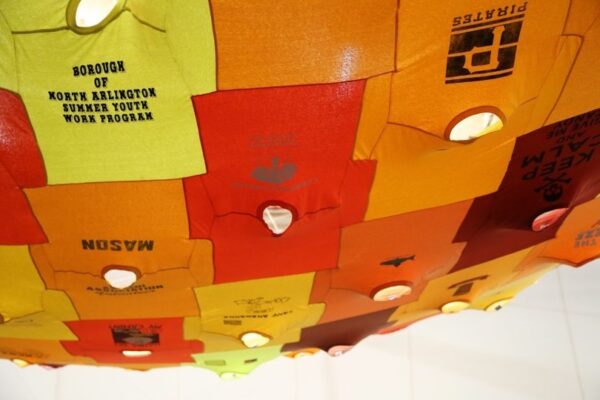
An Evening with Pia Camil: Here Comes the Sun. Solomon R. Guggenheim Museum | New York (2019)
Pia Camil
Pia Camil, born in 1980, is a Mexican multidisciplinary and multimedia performance artist. In the late 2010s, Camil began buying discarded clothes in local markets as a way of reflecting on the consumerism, traffic and clothing trade in today’s world. Camil deconstructed the t-shirts and sewed them together to create curtains, a canopy or a collective garment.At the Guggenheim Museum in New York, Pia Camil, for her performance, had participants walk through the central rotunda using a colossal fabric made from deconstructed t-shirts, inspired by works by Brazilian artists Lygia Pape and Hélio Oiticica.
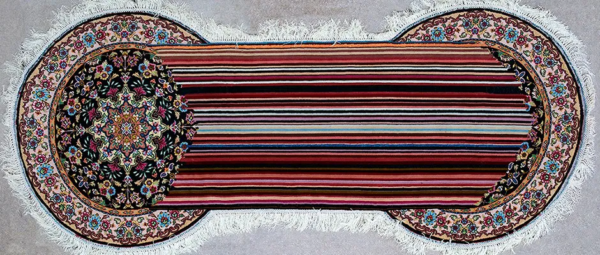
Double Tension carpet
Faig Ahmed
Born in 1982 in Azerbaijan, Faig Ahmed is a contemporary visual artist known for his surrealistic weavings that integrate visual distortions into traditional oriental rugs. A graduate of the sculpture course, his work uses ancient carpet weaving techniques from his native country, reframing them in a contemporary way. Her intricately patterned weavings are mounted on architectural structures made of wood or plastic. The artist’s deep interests and avenues of personal investigation are linked to world religions, mystical practices, ancient scriptures, calligraphy and patterns.
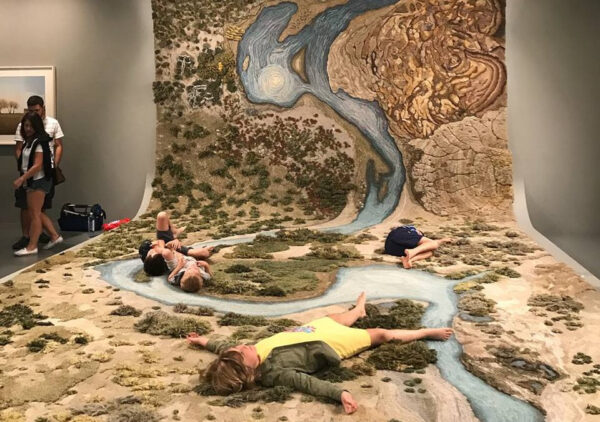
Santa Cruz River
Alexandra Kehayoglou
Argentine textile artist and activist Alexandra Kehayoglou, born in 1982 into a family of carpet makers, is best known for her large-scale rugs and tapestries that reflect natural landscapes, works that address the topic of climate change. Its color palette is calm and soft, using neutral and earthy tones connected to fauna and flora. The artist’s work is closely linked to nature, representing places impacted by climate change or damaged by human activity. Her work became known for its appeal to preservation and environmental awareness, thus addressing issues of extreme relevance nowadays.
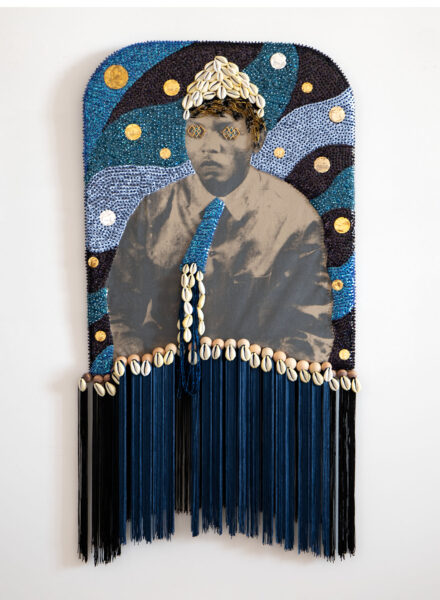
Ancestral Echoes | Sharon Barnes: Improvisations of a Polyrhythmic Being at Patricia Sweetow Gallery
Demetri Broxton
Demetri Broxton is an American artist born and raised in Oakland. For the last 20 years he has worked in the fields of education and the arts as an independent curator and practicing artist. About his work, the artist states that his textile sculptures reflect the connection with the sacred art of the Yoruba people of Nigeria, the traditions of the Mardi Gras Indians of New Orleans and his love of hip hop and graffiti leading to an ongoing investigation of the culture relations between Africa and America. Demetri is influenced by crafts and folk traditions and is passionate about infusing these traditions into the fine arts.
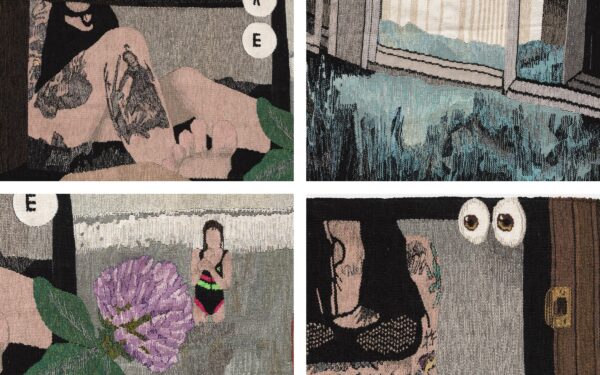
The Hidden Crisis (details), 2022.
Erin M. Riley
Erin M. Riley, born in 1985, is an American artist currently based in Brooklyn, whose work revolves around women, femininity and women’s issues. Riley’s work is mainly in hand-woven and hand-dyed wool tapestries. The motifs covered in her work are based on her personal history, her memories, fears and past traumas to show the struggle in finding her own identity, making her narrative can often be uncomfortable for some, as the artist displays shocking images of nudity, drugs, violence, self-mutilation, sexuality and menstruation. One of her best-known recent works is a tapestry depicting a young girl sitting on the floor burning a photograph of what appears to be her younger self surrounded by children’s toys.
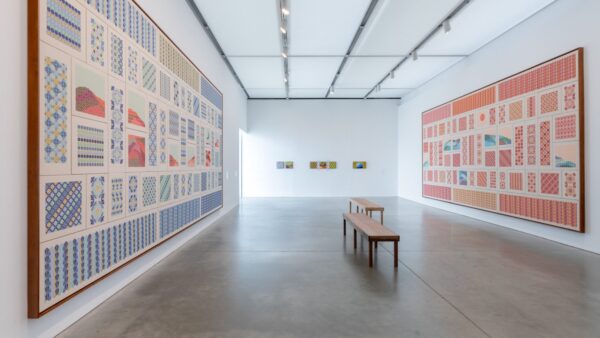
Fantasy and Truth (2022-2023), Institute of Contemporary Art in Boston
Jordan Nassar
Jordan Nassar, born in 1985 in New York, is a contemporary American textile artist. Of Palestinian descent, Nassar immersed himself in the textile traditions of that country, becoming known for using traditional tatreez embroidery on canvas in his works. His artistic discourse permeates political issues such as the relationship between Arabs and Israelis, which is also reflected in his life and work.
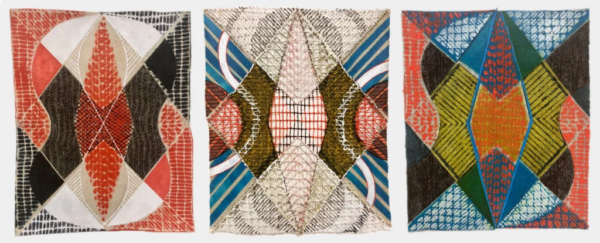
Sway/ Split/ Sliver (2018)
Julia Bland
Julia Bland is a multidisciplinary artist, born in Palo Alto, California in 1986. Her experimental process in textile format incorporates sewing, weaving, knotting, dyeing, creating abstractions of geometric compositions in her large-scale wall hangings. In her works Bland interweaves hand-woven and dyed wool, cotton, and linen threads as other materials such as canvas, wax, oil paint, and even denim, blankets, or sheets. Her inspirations range from the abstract expressionism of the 1960s and the hippie counterculture of the time with the use of tie-dye techniques.
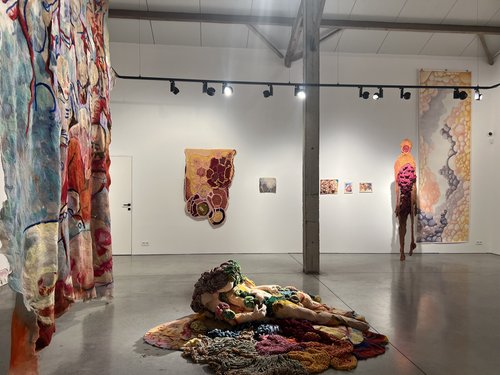
Solo exhibition at the Verduyn Gallery in 2023
Maria Abaddon
Maria Abadon was born in 1988 in Lima, Peru, where she continues to work and live. The artist is currently best known for her textile paintings and sculptures, marked by the bright colors of threads, wool, felting and embroidery. Her work delves into the visceral and macabre, revealing the complexity of humanity in all its layers and internal structures. Maria is a self-confessed fan of violent and low-budget B-films where she finds inspiration for her work and for her carnal visual language that characterizes a continuous conflict between our internal attributes and a contemporary condition of chaos. Her interesting pieces raise discussions about mortality, isolation, social issues, violence and the body.
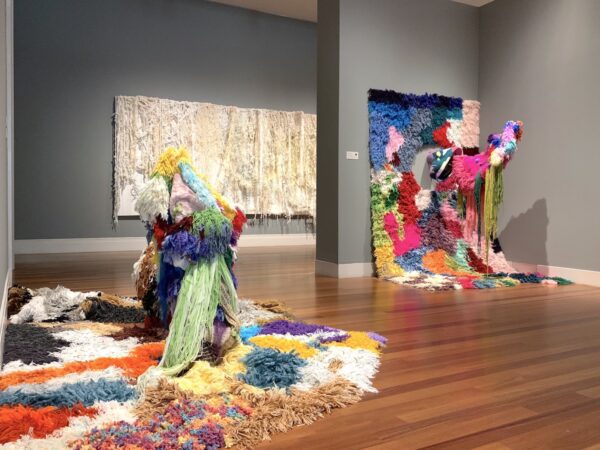 Solo exhibition at Ogden Museum of Southern Art
Sarah Zapata
Sarah Zapata, born in 1988, is an American textile artist of Peruvian descent. Today she lives in Brooklyn where she develops her work that addresses themes such as systems of power, Queerness and the intersection of identities. She is using traditional weaving, coiling and hooking techniques to obtain contemporary abstract objects. Her rugs are inspired by her Peruvian heritage and reference that country’s rich textile traditions, while embracing contemporary artisanal practices with intuitive freedom in composition.
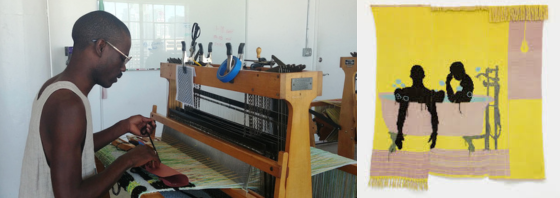
The artist in his studio and the piece “Romance and Logistics”
Diedrick Brackens
Diedrick Brackens, born in 1989, is an American artist and weaver. He currently lives and works in Los Angeles and is well known for his tapestries that explore allegory and narrative through the artist’s autobiography, broader themes of African-American identity and queer. Brackens incorporates weaving and quilting techniques from around the world as the basis for his tapestries, initially beginning as a sketch created primarily from Internet photographs or self-portraits, creating abstract and figurative works. The artist uses natural pigments, such as wine and tea, to dye by hand the cotton used in his own work.
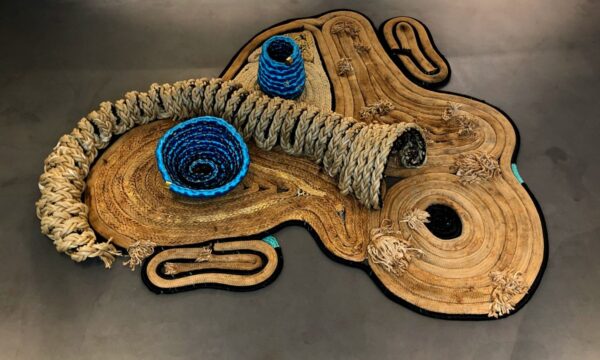
Blue Mask. 2019
Joana Schneider
Joana Schneider, 1990, Munich, is a multidisciplinary artist based in the Netherlands, known for her innovative approach to textile art and the integration of sustainable organic materials. She began her career as a jewelry designer and then migrated to the textile world in search of new formatting techniques. Her work is deeply rooted in Dutch craftsmanship, making playful use of exceptional materials and drawing inspiration from traditional practices. Techniques such as embroidery, passementerie and tapestry making became her specialty, combining them with the making of nets, such as the pluis net and the dolly knot used in the fishing sector. The use of recycled and sustainable materials has been characteristic of her work since the early beginning.
 Botanical Tapestry made to the London´s Heathrow Airpot and Royal Botanic Garden. 2019
Vanessa Barragao
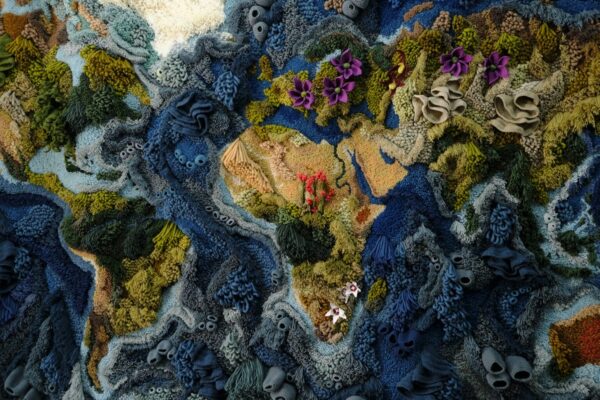
Vanessa Barragão, born in 1992, is a young Portuguese textile artist. Graduated from the University of Lisbon, she founded her design studio in 2014, developing her work focused on ecology and the preservation of ancient manual techniques. The materials used are recycled or discarded threads creating a work in handmade tapestries made with different textile techniques combining crochet, weaving, knitting, felting and manual tufting. The organic textures, tactile nature, and incredible layers of her art are reminiscent of the ocean and its coral reefs, perfectly capturing the beauty of marine life. The artist grew up on the Portuguese coast and her immense fascination with natural life is reflected in the sky, land and seas of her work.
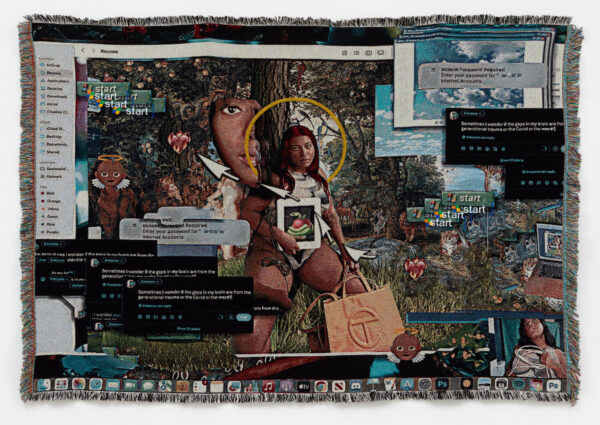
Deus Ex Machina (What was I made for?) at Pippy Houldsworth Gallery. 2024
Qualeasha Wood
Qualeasha Wood, born in 1996, is an American textile artist and through her work she frequently addresses issues about the representation of African-American women in the Internet culture. Her Wood self-portrait tapestry, The [Black] Madonna/Whore Complex, appeared on the cover of Art in America magazine in 2021 and the piece was acquired by the Metropolitan Museum of Art as part of the museum’s permanent collection in April 2022 thus, making Wood one of the youngest artists to have works acquired by the MET at the age of 25. Qualeasha was also inspired by the amazing artist Faith Ringgold.
(© cover photo Yanny Mishchuk)